India Functional Beverages Market Research Report, Growth Analysis and Industry Outlook 2026–2034
Market Overview & Summary
The India functional beverages market size reached USD 6.9 Billion in 2025. Looking forward, the market is projected to reach USD 18.8 Billion by 2034, exhibiting a growth rate (CAGR) of 10.74% during 2026-2034. The industry is experiencing strong, structural growth stimulated by a monumental shift in consumer priorities toward proactive healthcare, immunity enhancement, and holistic wellness. Shifting away from conventional sugary carbonated soft drinks, modern consumers are increasingly seeking functional formulations enriched with adaptogenic herbs, gut-health enhancers, electrolytes, and clean energy boosters. Consequently, the industry is rapidly diversifying across multiple categories ranging from sports and performance beverages to probiotic kombucha and cognitive nootropic drinks offering tangible physiological and mental benefits beyond basic hydration.
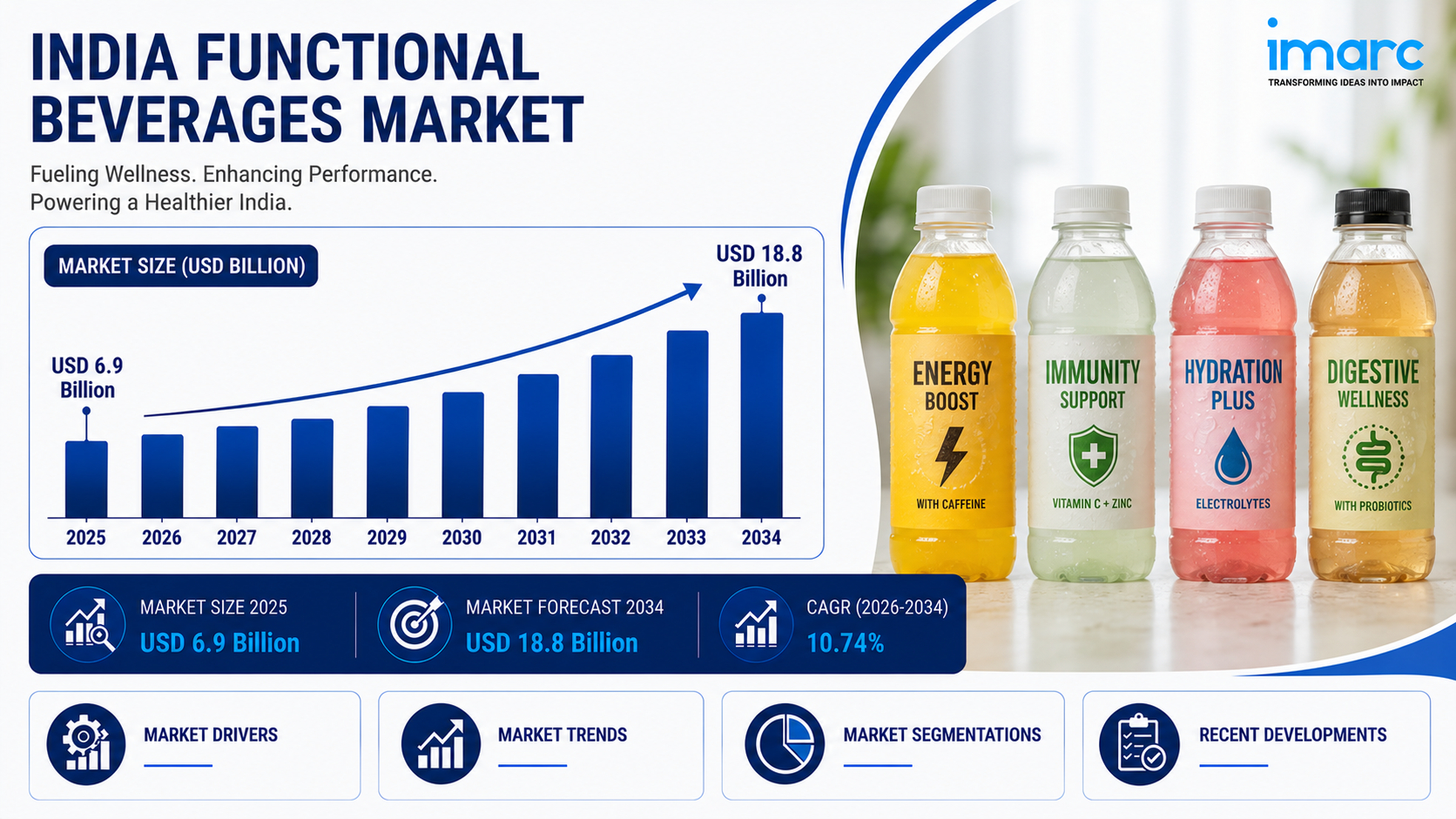
Market Size & Forecast:
-
Market Size (2025): USD 6.9 Billion.
-
Projected Market Size (2034): USD 18.8 Billion.
-
CAGR (2026 - 2034): 10.74%.
Key Market Trends:
-
Surge in Ayurvedic and Herbal Infusions:
Consumers are actively searching for natural wellness solutions, prompting the industry to adopt Ayurvedic and herbal formulations. Conventional ingredients such as turmeric, tulsi, ashwagandha, and giloy are gaining mainstream acceptance due to their proven adaptogenic, anti-inflammatory, and immunity-strengthening properties. These ingredients cater to a rising interest in holistic health and preventive care.
-
Focus on Gut Health and Probiotics:
Awareness regarding the importance of a healthy gut microbiome for overall well-being is heavily boosting the probiotic sector. Beverages like kombucha, kefir, and fermented juices are surging in popularity as they aid digestion and boost immunity. Furthermore, prebiotic drinks fortified with fiber are gaining traction because they feed beneficial gut bacteria.
-
Demand for Clean Energy and Cognitive Boosters:
The market is witnessing a shift toward sustained energy solutions. Products increasingly feature natural ingredients like matcha, ginseng, green coffee, and B vitamins, which provide clarity of mind and lasting energy without the crash associated with sugary alternatives. Formulations also frequently integrate nootropics and adaptogens to help alleviate stress and improve concentration.
-
Expansion of Functional Drink Formats:
The market offers a wide variety of formats to meet diverse lifestyle needs, ranging from refreshing wellness shots and herbal teas to infused waters and sports beverages. These formats successfully fuse ancient remedies with modern convenience, appealing heavily to busy professionals, athletes, and students who require potent, clean energy on the move.
-
Emphasis on Clean Labels:
Beverage brands are prioritizing clean labels and open communication, developing products that align closely with a preventive health strategy. This transparency appeals broadly to both health-conscious millennials and older demographics seeking natural, minimally processed solutions.
➤ Grab a sample copy of this report: https://www.imarcgroup.com/india-functional-beverages-market/requestsample
Strategic Market Dynamics:
Growth Drivers:
-
Rising Health and Wellness Awareness (Proactive Health Management):
The post-pandemic hyper-focus on proactive health management and immunity building is the primary driver compelling consumers to switch to nutrient-enriched beverages. Consumers are actively seeking out functional drinks that contribute to energy enhancement, immune system wellness, stress alleviation, and overall vitality. This behavioral shift reflects a greater awareness of holistic wellness, where beverages are expected to provide tangible physical and mental benefits beyond mere hydration.
-
Rising Urban Lifestyles and "Time-Poverty":
Hectic schedules, high-stress corporate environments, and active fitness routines among urban professionals are significantly boosting the demand for instant, on-the-go cognitive and physical energy enhancers. With an increasing interest in active living and everyday well-being, urban millennials, athletes, and students require potent, clean energy to sustain their lifestyles without the severe energy crashes associated with traditional sugary sodas.
-
FMCG Diversification and Market Premiumization:
Massive corporate investments and strategic portfolio expansions by FMCG giants are substantially widening market reach and product visibility. For example, Reliance Industries' introduction of 'Raskik' leverages its massive retail network, while Tata Consumer Products continues to diversify with functional offerings. Furthermore, premiumization is emerging as a significant trend, characterized by growing consumer willingness to pay higher price points for innovative, clean-label, and scientifically backed health products.
-
E-Commerce and Quick-Commerce (Q-Commerce) Expansion:
The rapid democratization of distribution through direct-to-consumer (D2C) brands and quick-commerce delivery apps (such as Swiggy Instamart, Blinkit, and Zepto) allows niche functional beverage startups to effortlessly bypass traditional retail barriers. These platforms have effectively enabled impulse health purchases, making premium, health-centric beverages highly accessible to health-aware Gen Z and millennial consumers across Tier-1 and Tier-2 cities.
-
Increasing Geriatric Population and Targeted Nutrition:
A growing elderly demographic is placing a heavy emphasis on health, vitality, and independence, acting as a massive catalyst for beverages that enhance bone strength, cardiovascular well-being, digestion, and mental function. Functional drinks are exceptionally suited to this age group due to their concentrated nutrition levels, highly convenient liquid consumption formats, and strict conformity to preventive healthcare behaviors.
Market Restraints:
-
Premium Pricing Models: Functional beverages, particularly those featuring complex nootropics, adaptogens, or specialized fermentation processes (like kombucha), often command a premium price point compared to standard carbonated soft drinks. This pricing can limit mass-market penetration, confining the bulk of consumption to urban, middle-to-upper-class demographics.
-
Navigating Shelf-Life and Cold Chain Logistics: Many functional drinks, specifically active probiotics and unpasteurized fermented juices, require strict temperature-controlled storage and limited shelf lives. This logistical challenge makes nationwide distribution difficult and expensive outside of Tier-1 metropolitan areas.
➤ Explore the Full Report with Charts, Table of Contents, and List of Figures: https://www.imarcgroup.com/india-functional-beverages-market
Competitive Landscape & Key Company Insights:
The competitive landscape of the India functional beverages market is rapidly evolving, featuring a mix of established multinational FMCG giants and agile, health-focused startups. Competition is heavily centered around clean-label ingredient sourcing, innovative flavor profiling, and strategic retail placement. Established players leverage their vast distribution networks to push new health-focused product lines, while new entrants frequently utilize e-commerce and direct-to-consumer (D2C) channels to target niche, health-conscious demographics. Porter's five forces analysis is often utilized by stakeholders to assess competitive rivalry, the threat of new entrants, and the power dynamics among buyers and suppliers within this highly attractive industry.
Deep-Dive Segment Insights:
Type Insights:
-
Energy Drinks
-
Sports Drinks
-
Dairy-based Beverages
-
Juices
-
Others
Key Insight: Energy and sports drinks remain highly popular among athletes and active professionals. Concurrently, dairy-based beverages (like kefir) and juices (often fermented or fortified) are capturing significant growth due to the rising focus on gut health and immune support.
Distribution Channel Insights:
-
Supermarket and Hypermarket
-
Specialty Stores
-
E-commerce
-
Others
Key Insight: While supermarkets and hypermarkets act as crucial touchpoints for mass brand visibility and product discovery, the e-commerce channel is accelerating rapidly. Online platforms allow niche brands focusing on specialized functional benefits (like nootropics or vegan probiotics) to reach targeted consumers directly.
End User Insights:
-
Athletes
-
Fitness Lifestyle Users
-
Others
Region Insights:
-
North India
-
South India
-
East India
-
West India
Recent News and Developments:
-
FSSAI Mandates Front-of-Pack Labeling (February 2025): The Food Safety and Standards Authority of India (FSSAI) issued draft regulations requiring clear, large-font declarations of added sugar and fat content on the front of all beverage packaging. This move aims to increase consumer transparency and is compelling manufacturers to adopt cleaner, healthier formulations.
-
Dabur India Ltd. Enters Wellness Shots Segment (March 2025): Capitalizing on the demand for Ayurvedic ingredients, FMCG giant Dabur India Ltd. launched a new range of ready-to-drink wellness shots featuring traditional adaptogens like ashwagandha and turmeric. The launch specifically targets busy urban consumers looking for convenient, on-the-go immunity-boosting solutions.
-
Reliance Industries Launches 'Raskik' (March 2025): In a strategic move to broaden its beverage portfolio following the successful re-launch of Campa Cola, Reliance Industries introduced 'Raskik'. This product is designed to leverage Reliance's massive retail network to capture a larger share of the rapidly expanding functional and wellness beverage segment.
-
Surge in Ready-to-Drink (RTD) Investments (Mid-2025 to 2026): India's beverage industry is heavily betting on functional hydration, repositioning items like coconut water, electrolyte drinks, kombucha, and protein-infused beverages as daily wellness essentials. According to industry reports, this strategic shift is expected to help the Indian RTD non-alcoholic beverage market double from around $20 billion in 2025 to $40 billion by 2030.
Customization Note: If you require any specific information not covered within this report's scope, we will provide it as part of the customization.
➤ Request Report Customization: https://www.imarcgroup.com/request?type=report&id=29685&flag=E
FAQs
Q1. What is the projected market size of the India functional beverages industry?
Ans. The India functional beverages market is projected to reach USD 18.8 Billion by 2034, growing from a base of USD 6.9 Billion in 2025.
Q2. What is the expected growth rate of the market?
Ans. The market is anticipated to exhibit a strong Compound Annual Growth Rate (CAGR) of 10.74% during the 2026-2034 forecast period.
Q3. What are the key product types in the functional beverages market?
Ans. The market is categorized into various product types, prominently including energy drinks, sports drinks, dairy-based beverages, and fortified juices.
Q4. What are the major trends shaping consumer preferences?
Ans. Consumers are heavily leaning toward Ayurvedic and herbal infusions (using ingredients like ashwagandha and turmeric), gut-health and probiotic beverages (like kombucha), and cognitive boosters that utilize natural energy sources like matcha and ginseng.
Q5. How are major corporations responding to this market growth?
Ans. Large FMCG players are actively diversifying their portfolios. For example, Reliance Industries launched 'Raskik' in 2025 to expand its consumer reach and capitalize on the booming demand for wellness-oriented drinks using its massive retail network.